
NEVER FEEL CONFUSED.
NEVER GET STUCK IN YOUR CAREER AGAIN.
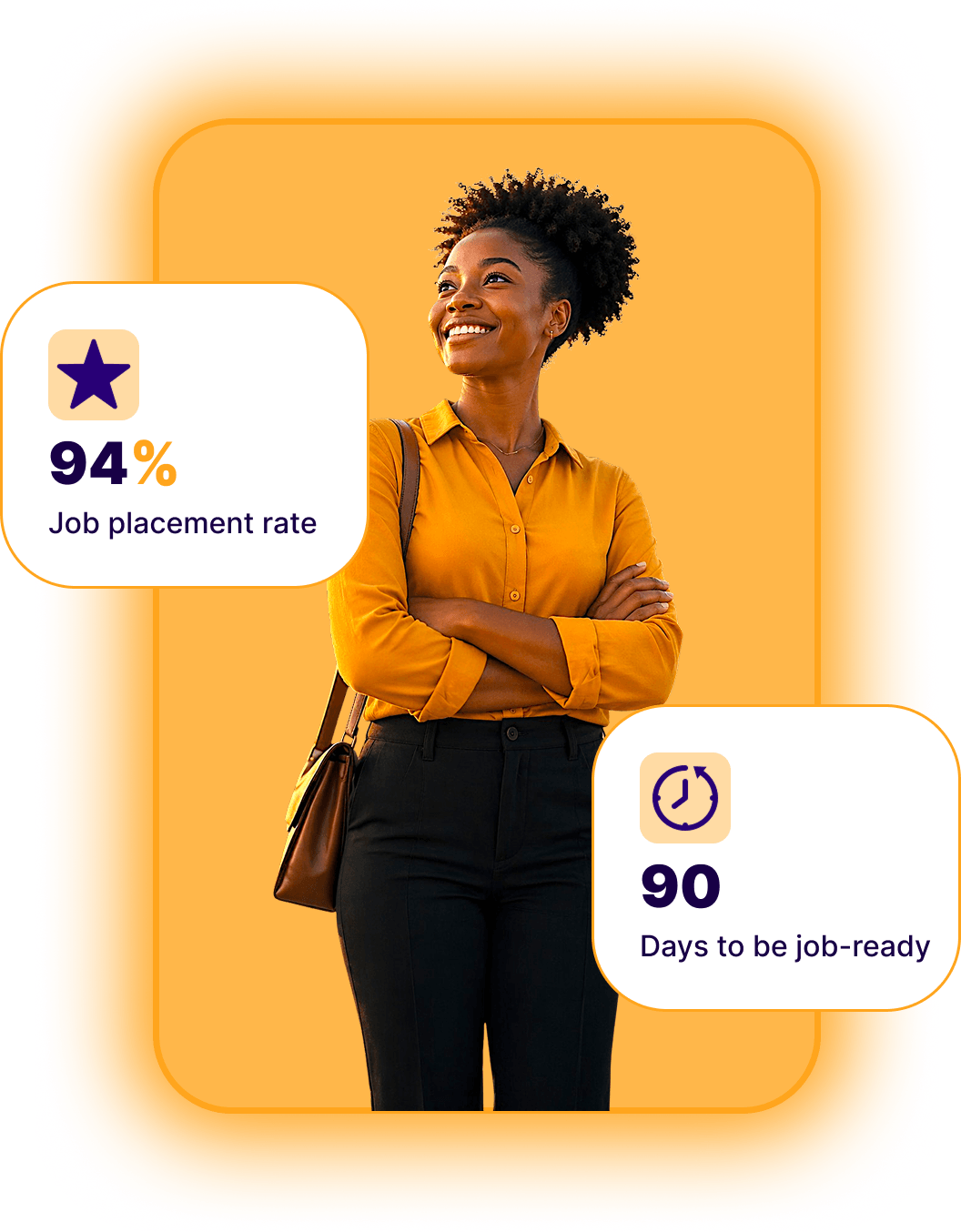
We Help Graduate And Career Switchers Become Job-Ready In Data, Business, Project & Change Roles In 90 Days Without Prior Experience.
NEXT COHORT CLASSES START 4TH JULY 2026
Here's Exactly What You Will Walk Away With

Get Hired With Confidence
You’ll gain real, job-ready experience and the confidence to apply for roles that actually move your career forward.

Find Your Clear Path
You’ll follow a structured step-by-step path so you stop guessing and finally know exactly what to do next.

Unlock Better Opportunities
You’ll build in-demand skills that open doors to higher-paying roles and better opportunities.
Choose Your Career Path That Fits You Best

Data Analysis
Learn how to analyse data, build dashboards, and insights that drive real business decisions.
DATA ANALYSIS CURRICULUM
Role of Data Analysis: Understand what data analysts do in real organisations.
Business Thinking: Differentiate between business problems and data problems.
Data Analysis Lifecycle: Learn the step-by-step process used in real projects.
KPIs & Metrics: Understand how performance is measured and decisions are made.
Data-Driven Decision Making: Learn how businesses use data to guide actions.
Data Sources: Identify where business data comes from.
Data Quality: Learn how to assess accuracy, consistency, and completeness.
Data Governance: Understand rules for managing and protecting data.
Data Ethics & Privacy: Learn responsible handling of sensitive information.
Advanced Spreadsheet Functions: Work with powerful Excel tools for analysis.
Lookup & Logical Functions: Extract and manipulate data efficiently.
Data Cleaning in Spreadsheets: Fix errors and prepare raw data for analysis.
Pivot Tables & Reporting: Summarise and present data clearly for decision-making.
Databases & Tables: Understand how structured data is stored.
Basic SQL Queries: Write simple queries to retrieve data.
Filtering, Sorting & Aggregation: Analyse and refine datasets for insights.
Data Cleaning Process: Remove errors and inconsistencies.
Preparing Analysis-Ready Data: Structure datasets for real-world use cases.
Data Segmentation: Break data into meaningful groups.
Trend Analysis: Identify changes and patterns over time.
Correlation Basics: Understand relationships between variables.
Pattern & Anomaly Detection: Identify unusual data behaviour.
Descriptive Statistics: Understand data distributions and summaries.
Statistical Significance: Learn how to interpret results correctly.
AI Tools for Analysis: Use AI to support Python/R workflows.
Prompting AI: Generate analysis and insights using structured prompts.
Output Validation: Verify AI-generated results for accuracy.
Data Visualisation: Create charts and graphs for analysis.
Dashboards: Build interactive reports using Power BI or Tableau.
Insight Communication: Present findings in a clear, business-friendly way.

Change Management
Learn how to guide teams through change, manage resistance, and ensure the system are successfully adopted without confusion or resistance.
CHANGE MANAGEMENT CURRICULUM
Core Principles of Change Management: Understand how change works in organisations.
Types of Change: Distinguish between organisational and local change.
Change Framework Overview: Learn structured approaches to managing change
Change Impact Assessment: Identify how change affects people and processes.
Change Readiness Assessment: Evaluate organisational preparedness.
Organisational Legacy Assessment: Understand existing systems and constraints.
Change Planning & Execution: Design and implement structured change plans.
Integrated Change Planning: Align change with business objectives.
Change Strategy Development: Build clear approaches for execution.
Business Case for Change: Justify why change is needed.
Stakeholder Mapping: Identify key individuals affected by change.
Stakeholder Assessment: Understand influence, interest, and impact.
Stakeholder Engagement: Build buy-in and reduce resistance.
Change Network Mapping: Identify champions and influence networks.
Change Communication Strategy: Deliver clear and consistent messaging.
Effective Change Communication: Tailor messages for different audiences.
Narrative & Storytelling: Communicate change in a compelling way.
Influence Without Authority: Drive action without formal power.
Resistance Management Strategies: Handle pushback effectively.
Change Adoption Metrics: Measure acceptance and adoption levels.
Change Measurement: Track progress using structured indicators.
Critical Success Factors: Identify what ensures change success.
Change Execution: Implement structured change initiatives.
Monitoring & Evaluation: Track progress and measure outcomes.
Change Tracking & Deployment: Manage rollout and implementation phases.
Pre/Post Change Delivery: Manage transition before and after implementation.
Change Leadership: Guide teams through transformation.
Governance Frameworks: Ensure accountability and control.
Change Agent & Champion Networks: Build internal support systems.
Organisational Alignment: Align change with business direction.
Change Ideation & Deployment: Generate and implement change initiatives.
Blended Change & Project Frameworks: Combine change and project management.
BAU Transitioning: Move change into business-as-usual operations.
Change Sustainability Strategy: Ensure long-term adoption.
Organisational Change Alignment: Align change with business strategy.
Post Change Evaluation: Review success and improvement areas.
ROI & Value Delivery: Measure impact and business outcomes.
Narrative Writing & Storytelling: Communicate change effectively.
Training Needs Analysis: Identify skill gaps and learning needs.
Crafting a Change Case: Build compelling arguments for transformation.
Leadership Influence: Drive change across all organisational levels.

Project Management
Plan, mange, and deliver project using real world frameworks so you can confidently take on leadership roles in any organization.
PROJECT MANAGEMENT CURRICULUM
Core Principles of Project Management: Understand what project management really involves.
Methodologies & Frameworks: Learn Agile, Waterfall, Hybrid, and PRINCE2 approaches.
Project Governance Basics: Understand how projects are controlled and guided.
Business Case Development: Learn how project ideas are justified.
Project Charter Creation: Define scope, objectives, and expectations.
Feasibility Analysis: Assess whether a project is viable before execution.
Project Planning: Budgeting, resource allocation, and timeline planning.
Work Breakdown Structure (WBS): Break projects into manageable tasks.
Scheduling Techniques: Plan timelines and delivery milestones effectively.
Risk Management: Identify and mitigate project risks.
Issue Management: Handle problems that arise during execution.
RAID Logs: Track risks, assumptions, issues, and dependencie.
Change Control: Manage and approve project changes effectively.
Agile & Scrum Fundamentals: Learn iterative delivery methods.
Waterfall Methodology Deep Dive: Structured sequential project delivery.
Hybrid Delivery Models: Combine Agile and Waterfall effectively.
PRINCE2 Framework: Structured governance and control approach.
Project Execution: Manage delivery from start to finish.
Monitoring & Reporting: Track progress and communicate updates.
Stage Boundaries Management: Control transitions between phases.
Managing Product Delivery: Ensure outputs meet expectations.
Stakeholder Management: Identify and engage project stakeholders.
Communication Strategy: Manage clear and effective communication.
Leadership Skills: Guide teams and influence project outcomes.
Soft Skills for Project Leaders: Collaboration, negotiation, and influence.
Project Governance: Oversight, assurance, and compliance.
Quality Management: Maintain standards across deliverables.
Configuration Management: Control changes to project components.
PMO Fundamentals: Understand portfolio oversight structures.
Portfolio & Programme Management: Manage multiple projects strategically.
Tailoring Methodologies: Adapt frameworks to organisational needs.
Benefit Realisation: Ensure projects deliver measurable value.
Post-Implementation Reviews: Evaluate project success and ROI.
Project Management Tools: Digital platforms for planning and tracking.
AI in Project Management: Use AI to improve planning and execution.
Kanban & Lean Methods: Improve workflow efficiency.
Project Templates & Documentation: Standard tools used in real projects.

Business Analysis
Understand how businesses work, gather requirements, and turn ideas into clear solutions teams and companies can act on.
BUSINESS ANALYSIS CURRICULUM
Role of a Business Analyst: Understand what BAs actually do in real projects.
Definition of Business Analysis: Learn what business analysis means in practice'
Benefits of Business Analysis: Understand why organisations rely on BA functions.
BA Competencies: Core skills required to succeed as a Business Analyst
Project Delivery Frameworks: Agile, Waterfall, Scrum, SDLC, and GDS,
Agile Principles & Manifesto: Understand modern delivery thinking.
Project Lifecycle: Learn how projects move from idea to delivery.
Stakeholder Identification: Understand who is affected by projects.
Stakeholder Analysis: Assess influence, interest, and impact.
Managing Difficult Stakeholders: Handle resistance and challenging behaviours'
Stakeholder Engagement Techniques: Build alignment and collaboration.
Requirements Definition: Understand what makes a good requirement.
Types of Requirements: Functional vs non-functional requirements.
Requirements Problems: Identify common issues in requirement gathering.
Requirements Engineering Framework: Structure for gathering and managing requirements.
Requirements Elicitation Techniques: Extract information from stakeholders.
Prioritisation Techniques: Decide what matters most in delivery.
Problem-Solving Techniques: Break down business challenges effectively.
Modelling Techniques: Visualise and structure business requirements.
BA Tools & Techniques: Core tools used in analysis work.
Business Process Improvement: Identify and improve inefficient processes.
Business Analysis Lifecycle: Apply BA within business change environments.
BA Approach to Projects: Understand how BAs contribute to delivery.
Risk Analysis Techniques: RAID logs, impact analysis, and risk tracking.
Change Control Management: Manage changes in scope and requirements.
Business Case Development: Justify and support business decisions.
Business Process Modelling: Visualise workflows and systems.
BA Artefacts: Key documents used in business analysis work.
Modelling Techniques: Structure data, processes, and requirements clearly.
What You’ll Get From Career Excellence Hub

Personalised Training
Learn in a way that fits your level so you don’t feel lost or left behind.

Project Work Experience
Build hands-on experience you can confidently talk about to employers.

Interview Preparation & CV Support
Get coached, refine your CV, and prepare to pass real interviews.

Assignments & Case Studies
Practice real-world scenarios that prepare you for the job,

Access to Tools & Community
Use industry tools and connect with others on the same path.

Pre & Post Job Mentorship
Get guidance before you land a role and support even after you get hired.
Meet The Team

Adebimpe Ademosu
A seasoned Business Analyst with over 10 years industry experience

Frank Ogun
A seasoned Data Analyst with over 10 years industry experience.

Mary Morka-Osadume
A Change Management Consultant with over 10 years industry experience.
Flexible And Affordable Payment
Enroll In A Single Course
Enroll In Double Courses
FREQUENTLY ASKED QUESTION
No, you can start from scratch. The training is structure step-by-step so you won't feel lost, even if you haven't work in tech before.
You'll work on real-world project, assignment, and case studies so you can confidently demonstrate your skill.
Yes, you will get guidance through mentorship, CV reviews, interviews preparation, and support throughout your learning journey.
You will continue to get support with job application, interview preparation and mentorship.
It depends on your pace and consistency, but you can have a job-ready skills within weeks by working on practical project and assignment.
Become The Next In-Demand Career Professional
Learn the exact skills, gain real experience, and get support you need to confidently move into a better roles
Move Forward With Clarity
Begin Where You Are
NEXT COHORT CLASSES START 4TH JULY 2026